Key Takeaways
- The macula supports the sharp, straight-ahead vision you use to read and recognize faces.
- Vitamin C, vitamin E, lutein, zeaxanthin, zinc, copper, and omega-3s are linked to macular health.
- Leafy greens, orange peppers, salmon, walnuts, citrus, and almonds add these nutrients to your meals.
- One standard formula doesn’t suit every person.
- A macular health check can show your risk level for dry and wet macular degeneration.
Why Nutrition Matters for Macular Degeneration
Reading a text message, threading a needle, and spotting a familiar face across the grocery aisle all depend on the macula, a tiny area at the back of your eye that’s responsible for sharp, straight-ahead vision. If this tissue becomes damaged, central vision can start to look blurry.
In some cases, the right vitamins may contribute to macular health. However, there’s no one ‘best’ formula. The right vitamins to take for macular degeneration depend on how far the condition has progressed, your own risk level, and whether you have the dry or wet form of the condition. Our team at Sun Valley Eye Care will check your macular health before recommending a Vision Essence vitamin formula.
A Quick Look at Macular Degeneration
Macular degeneration comes in two forms. The dry form develops slowly over years and is more common. The wet form involves fluid or bleeding under the macula and tends to progress more quickly. Age, family history, smoking, and diet all play a role in your risk.
Early Signs to Watch For
Changes related to macular degeneration often develop quietly. In fact, in many cases, people only notice problems when one of their eyes is covered. Common symptoms of macular degeneration include:
- Blurry or wavy central vision, where straight lines look bent
- Trouble reading small print or seeing fine detail
- A dim or faded patch in the middle of what you’re looking at
Key Nutrients Linked to Macular Health
Common nutrients linked to eye health and/or macular health include antioxidants like Vitamin C and vitamin E, lutein and zeaxanthin, as well as zinc and copper and omega-3 fatty acids.
Food Sources You Can Add Today
Dark leafy greens like kale and spinach are strong sources of lutein and zeaxanthin, as are orange peppers and corn. For omega-3s, think salmon, sardines, walnuts, and ground flaxseed stirred into oatmeal.
Citrus fruit and berries cover vitamin C. Almonds and legumes help with vitamin E and zinc.
Eye Vitamins and Diet Gaps
Supplements help support macular health, but they aren’t a treatment for macular degeneration. Questions about dosage belong with your eye doctor, who can look at what you already eat and what your eyes need during adult and senior eye exams.
Why One Standard Formula Doesn’t Suit Everyone
The widely used and somewhat well-known AREDS 2 blend of vitamins was studied in people with intermediate stages of macular degeneration. If your changes are earlier than that, the same blend may not be the right match.
Zinc is another consideration. The amount of zinc in a standard formula doesn’t suit everyone, and some people do better with less or none. Genetics can also influence how your body responds to certain nutrients, so a formula helpful for one family member may not be the one for you.

Vision Essence Options Our Team Recommends
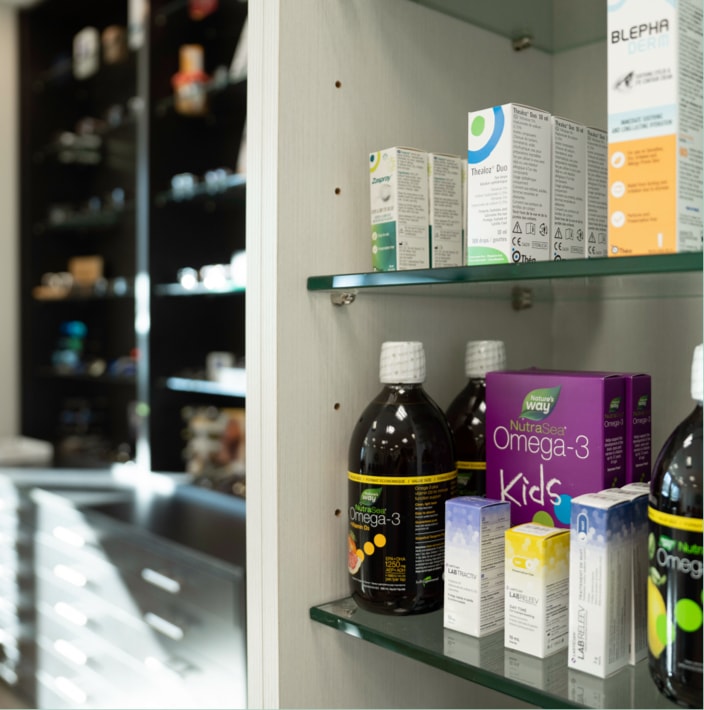
Vision Essence offers low-zinc and no-zinc vitamin formulas. This allows us to adjust our recommendation rather than force you into one common option. We can also recommend an Early Defence vitamin formula built for earlier stages of macular degeneration.
The capsules are vegan and taken once daily, which makes them simple to fold into your morning routine alongside coffee or breakfast.
Macular Health Test & Your Risk Level
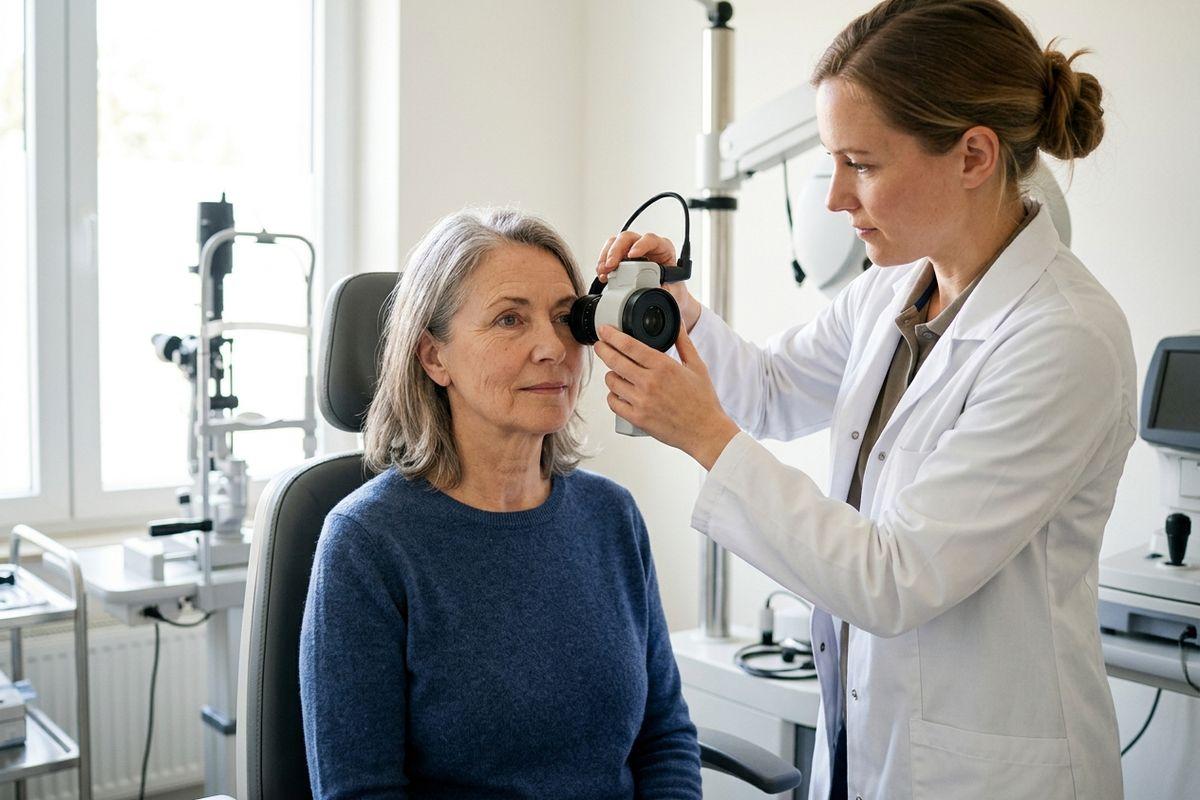
Guesswork isn’t a good basis for choosing a supplement. Our clinic uses an in-office macular health device to check the health of your macula with a high level of certainty, alongside retinal imaging of the back of your eye.
Your results show your risk level for both the dry and the wet form of macular degeneration. This is what guides our recommendations on vitamins and supplements.
Everyday Habits to Support Your Vision
Sunglasses with UV protection help shield your eyes during Calgary’s bright afternoons, on the ski hill, and wherever else you’re outside. Quitting smoking makes a meaningful difference to your risk, while staying active helps support the blood vessels that feed your eyes.
Routine eye exams tie it all together. As your optometrist in Calgary SE, we can track your macular health year over year and adjust your supplement plan as things change.
If you’re concerned about macular degeneration or simply want to assess your risk level, book a macular health check with our team at Sun Valley Eye Care, and we’ll help you find the answers you need.